By Shannon Howard
Amid compounding global shocks, from climate volatility to rising conflicts and trade disruptions, achieving a world without hunger is ever more urgent and complex. The World Food Programme is at the forefront of responding to rising food insecurity, but humanitarian needs consistently outpace available funding. Addressing global hunger requires not only greater resources but also smarter and more effective collaborations. No single organisation can overcome food and nutrition security challenges on its own. The international agrifood trade community emerges as a key actor in achieving the goal of Zero Hunger: Nearly one in four kilocalories will cross international borders over the next ten years. However, in the face of a growing global population, ensuring food supply while respecting the environment and local populations of producing countries is a challenge.
To enhance global food security in today’s turbulent context, we must link all segments of the food supply chain. International Geneva, with its unique concentration of humanitarian agencies, trade professionals, policy experts, and commodity businesses, offers a hub for strengthening partnerships and alliances.
To enhance global food security in today’s turbulent context, we must link all segments of the food supply chain. International Geneva, with its unique concentration of humanitarian agencies, trade professionals, policy experts, and commodity businesses, offers a hub for strengthening partnerships and alliances. There is an urgent need to explore and strengthen principled partnerships that leverage the unique expertise of public and private actors across the food supply chain.
Geneva as a Hub for Agrifood Trade and Dialogue
Geneva occupies a strategic crossroads in global agrifood trade. Switzerland is one of the world’s foremost commodity trading hubs, in particular for grains and other agricultural products. Currently, over 900 commodity trading companies are based in Switzerland, with the majority clustered in and around Geneva, with about two-thirds of all Swiss commodity companies located in the Lac Léman region. The sector's economic footprint is significant: it accounts for roughly four to five percent of Switzerland's GDP. In the Canton of Geneva, it is estimated that commodity trading firms contribute approximately one-fifth of local tax income, highlighting their significant role in the regional economy.
This concentration of agrifood trading expertise means Geneva is not just a financial centre, but also a knowledge hub for global food flows. Some 22 percent of global commodities transport is managed through the Lake Geneva region. With an estimated one-third of the world’s crude oil traded through Switzerland, the country similarly plays a significant role in grain, sugar, coffee, and cocoa markets.
There remains an absence of dialogue between Geneva’s commodity trading community and the humanitarian community. Bridging this absence of dialogue and bringing these two communities closer could perhaps be a step towards unlocking new approaches to zero hunger.
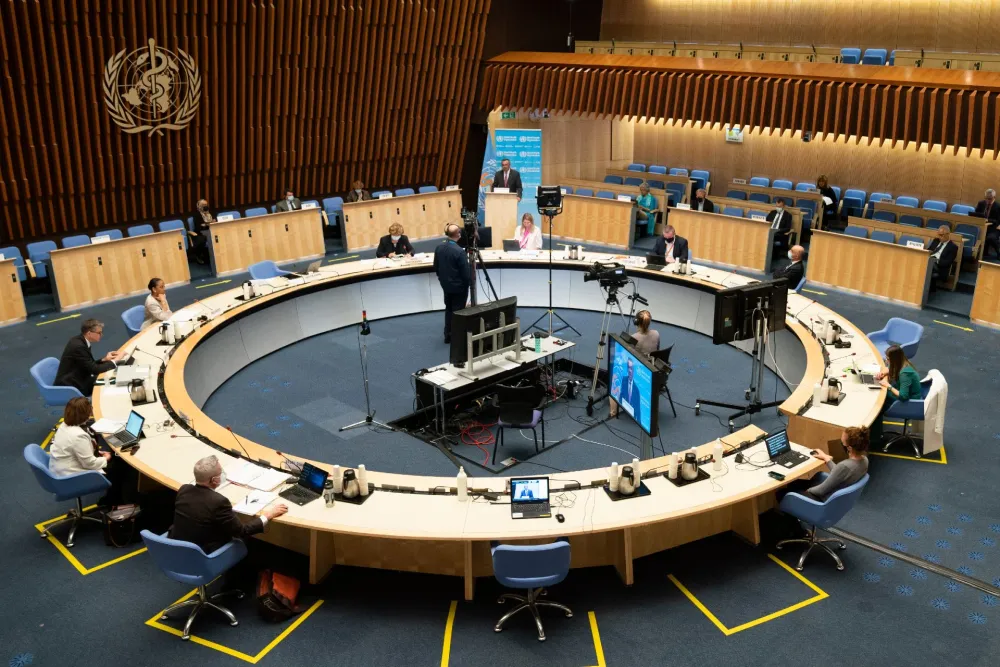
International Geneva, as a centre for multilateral dialogue on humanitarian and development issues, creates unique opportunities for cross-sector discussions, knowledge sharing, and capacity strengthening. The presence of commodity traders alongside UN agencies in Geneva is a unique asset. It presents an opportunity for policymakers and humanitarian actors to meet commodity traders and create dynamic solutions for humanitarian crises and food security. Yet, there remains an absence of dialogue between Geneva’s commodity trading community and the humanitarian community. Bridging this absence of dialogue and bringing these two communities closer could perhaps be a step towards unlocking new approaches to zero hunger.
Partnerships Along the Supply Chain
The World Food Programme (WFP) operates the world’s largest humanitarian supply chain, covering procurement, transport, storage, and last-mile delivery across more than 120 countries. In 2024 alone, WFP procured 1.97 million metric tons of food valued at USD 1.4 billion and transported over 2.6 million metric tons of humanitarian cargo by sea, air, and road. Grains and cereals accounted for nearly 70 percent of this volume, underscoring WFP’s deep connection to global grain markets.
Given this scale, WFP’s engagement with the international agrifood community extends far beyond simple transactions. Geneva, home to both leading humanitarian organisations and many of the world’s foremost grain and commodity trading firms, provides a unique platform to strengthen collaboration across the entire food supply chain, from producers and traders to humanitarian logisticians and policymakers.
In the context of tightening resources and rising operational costs, such collaboration is not optional; it is essential. WFP’s strong presence in international food markets makes it a strategic actor within the global agrifood ecosystem. Through a competitive and transparent procurement process, WFP upholds the highest standards of accountability. Its partnerships framework and procurement system maintain strict firewalls to safeguard transparency, enabling companies to serve as both trusted suppliers and valued partners.
By driving efficiency, operating reliably in complex environments, and delivering for others, partners can help build more resilient food systems that create both humanitarian impact and shared value. This approach complements WFP’s broader partnership ethos: one founded on trust and shared growth.
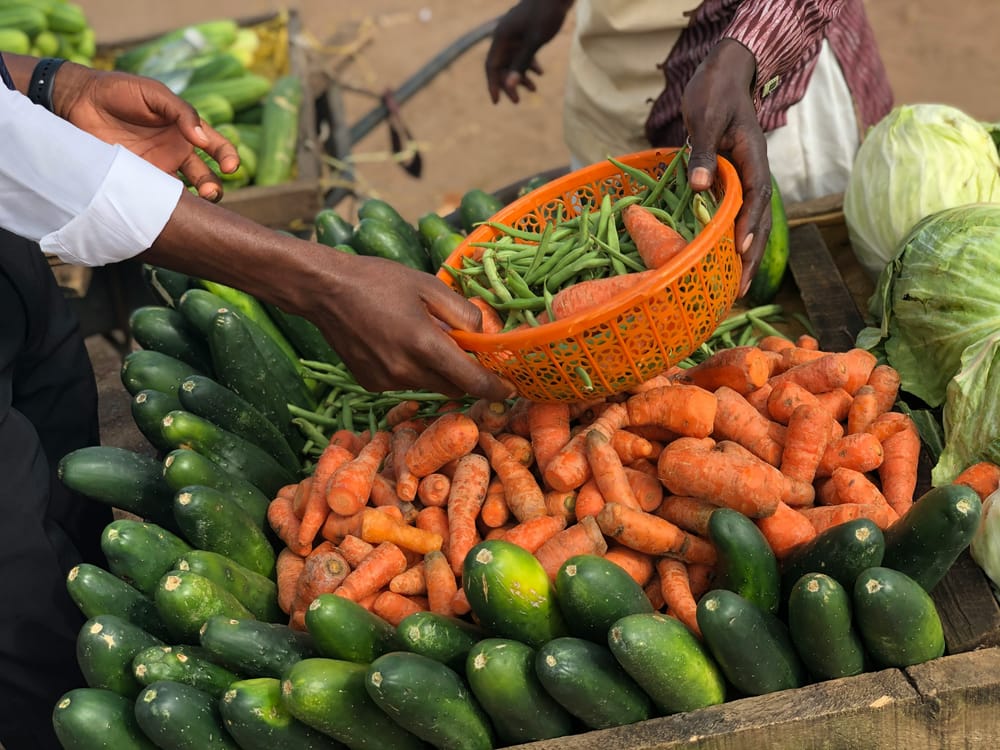
Collaboration can unlock win–win opportunities that go beyond commercial transactions, focusing instead on innovation, sustainability, and operational excellence. Private-sector expertise in areas such as logistics optimisation, traceability, and risk management can meaningfully complement WFP’s on-the-ground experience in fragile and high-risk contexts. Joint efforts could also advance localised procurement, support smallholder farmers, and promote shared sustainability metrics.
Throughout all engagements, WFP maintains a clear separation between its procurement and partnership functions to preserve transparency and prevent conflicts of interest—ensuring that every collaboration reinforces integrity, efficiency, and impact.
Information Exchange as an Opportunity for Strong Partnerships
Commodity traders possess strategic insights into efficient and responsive supply chain management. Their business models rely on real-time analysis of production trends, stock levels, pricing, and risk factors such as export policies and geopolitical disruptions. Meanwhile, humanitarian actors like the World Food Programme (WFP) operate in highly complex and fragile environments, with access to granular, field-level data on acute food insecurity hotspots and expertise in last-mile delivery logistics, from planning and sourcing to transport, storage, and distribution.
Bridging humanitarian and commercial supply chain excellence is not only possible but essential. Principled information exchange becomes a powerful tool for collaboration and information sharing. This mutual exchange supports both operational excellence and social impact, advancing food security while aligning with corporate responsibility goals.
A compelling example of technical expertise sharing is WFP’s partnership with Mars, Incorporated to strengthen food safety systems. Mars contributes its deep industry knowledge in incident management, supplier risk assessments, and food safety research. This collaboration includes joint work on food safety protocols such as HACCP/VACCP, horizon scanning for emerging risks, and coaching of WFP staff. The partnership is further supported by a financial contribution from Mars, enabling WFP to enhance its internal capabilities while aligning with global best practices. This model illustrates how private sector expertise can be leveraged to improve humanitarian supply chain resilience and safety, without compromising procurement neutrality.
Towards Shared Sustainability Goals
Beyond data, partnerships can drive shared sustainability goals. Global grain traders are already grappling with how to make food supply chains more sustainable and resilient. The Grain and Feed Trade Association (Gafta) Sustainability Pledge commits its member companies to advance the SDGs: “Gafta members are working to nourish the world, protect the planet, and enrich communities, and acknowledge the key role business plays in advancing the global goals”.
Actors like WFP work constantly on optimising their own supply chain footprint while promoting sustainable food systems. Closer links with the private sector can reinforce such efforts, leveraging the innovations and best practices of industry leaders to empower WFP’s humanitarian operations globally.
Geneva’s Untapped Potential
In May 2025, GrainCom, a major grain industry conference in Geneva, featured for the first time a dedicated session on food security with participation from WFP. Engaging commodity traders, agribusinesses, shippers, and financiers as partners is critical to building more resilient food systems. Trust and understanding are essential between sectors that have historically operated quite separately. A prime example of effective collaboration between the humanitarian sector and private industry can be seen in the partnership between the World Food Programme (WFP) and CMA CGM, a leading global shipping company. Since 2023, the CMA CGM Foundation has played a pivotal role in supporting WFP’s logistics operations by donating 1,000 free shipping containers each year. These containers are utilised to transport essential food supplies to vulnerable populations worldwide, significantly enhancing WFP’s ability to respond swiftly and efficiently to food crises.
Recognising the growing needs and the impact of its contribution, CMA CGM has committed to expanding its support in 2025. Through the “Containers of Hope” program, the Foundation will double the annual number of free shipping containers provided, increasing the total from 1,000 to 2,000. This substantial increase in capacity will enable WFP to deliver even more critical food assistance, reinforcing the value of principled, cross-sector partnerships in building a more resilient and responsive global food supply chain.
Towards a Food-Secure Future Through Partnerships
With collaboration in international hubs like Geneva, these actors have the potential to strengthen the supply chain from farm to port to mouth by continuing to work towards operationalising the right to food even in a time of uncertainty and increasing complexity, while fostering reimagination and new approaches.
By strengthening engagement, there are possibilities to combine the work of the true strategic actors along the lines of efficiency, effectiveness, innovation, and public purpose. With collaboration in international hubs like Geneva, these actors have the potential to strengthen the supply chain from farm to port to mouth by continuing to work towards operationalising the right to food even in a time of uncertainty and increasing complexity, while fostering reimagination and new approaches.
About the Author
Shannon Howard is the Director of the Geneva Office of the United Nations World Food Programme
All publications of the Geneva Policy Outlook 2026 are personal contributions from the authors and do not necessarily reflect the views of the institutions they represent, nor the views of the Republic and State of Geneva, the City of Geneva, the Fondation pour Genève, and Geneva Graduate Institute.