By Corinne Momal-Vanian and Prathit Singh
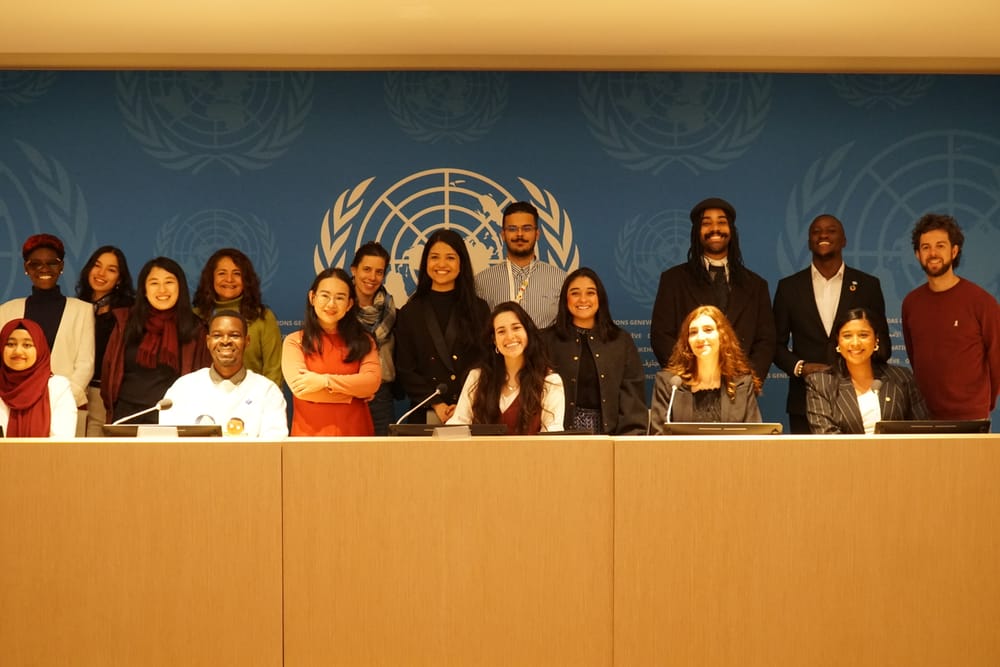
While Geneva stands at the crossroads of global cooperation, being at the heart of addressing overlapping crises of political polarisation, climate crisis, and rising conflicts, it continues to lack the voices of young people whose futures are being shaped by decisions on global governance taken in the city. With people under 25 representing 40% of the world’s population, and over half in many developing countries, their exclusion from global governance is both undemocratic and short-sighted. For International Geneva to remain a legitimate hub of global governance, it must evolve from a space that speaks about youth participation to one that listens to and is shaped by the voices and lived experiences of young people.
Why Youth Participation Matters Now
Amid global democratic decline, polarisation, and radicalisation, empowering youth participation will be a step towards rebuilding civic trust and strengthening social cohesion.
Young people are not disengaged. Across the world, they are driving change in their communities, mobilising peers, and innovating new forms of civic engagement, online and offline. Be it through leading political movements and reclaiming democracy and demanding more accountable institutions, or by pushing for stronger climate action, young people have been actively pushing for meaningful change in their communities and globally. Yet their voices remain largely absent from the decision-making spaces that define their lives. This silence erodes trust in institutions and weakens the legitimacy of international cooperation at a time when democracy and global solidarity are under pressure. Engaging young people meaningfully is not only a matter of fairness, but also of legitimacy and effectiveness. Amid global democratic decline, polarisation, and radicalisation, empowering youth participation will be a step towards rebuilding civic trust and strengthening social cohesion. However, while Geneva hosts a web of organisations working collaboratively and forming alliances across human rights, humanitarian, peacebuilding, and environmental actors, it continues to lack a similar collaborative, inclusive, and representative approach towards incorporating young people’s perspectives.
Beyond Tokenism: Removing Structural Barriers
Meaningful participation of young people requires a structural change in the existing approach to youth participation. This ranges from covering full costs of participation, providing mentorship, to opening access to spaces, networks, and opportunities that allow young people to contribute as peers and equal stakeholders.
The existing avenues of youth participation in Geneva continue to be largely symbolic, often limited to tokenistic speaking slots or short consultations without concrete outcomes or feedback. These engagements often also do not fully cover travel and accommodation costs associated with being at an expensive multilateral hub, leading to young people turning down these offers. Additionally, young people living under unstable or authoritarian regimes, whose voices and experiences matter even more in decisions on global governance, face additional travel difficulties with restrictive visa regimes. Existing youth spaces, therefore, lack an inclusive and representative approach to youth participation. A recent UNICEF study found that more than 80% of young people felt their participation in international forums was tokenistic, while 90% did not find the processes and spaces for youth engagement to be inclusive, equal, and representative enough, and 94% reported inadequate preparation and follow-up. Meaningful participation of young people requires a structural change in the existing approach to youth participation. This ranges from covering full costs of participation, providing mentorship, to opening access to spaces, networks, and opportunities that allow young people to contribute as peers and equal stakeholders. Young people must be recognised not only as advocates on “youth-centred issues,” but as contributors across the full spectrum of global policy decisions that concern their wellbeing - from climate and digital governance to disarmament, peacebuilding, and public health.
Breaking the “Golden Circle”
Many existing international forums also feature the same small group of well-networked youth representatives who circulate across conferences. While their experience is valuable, such spaces miss out on reflecting the diversity of youth perspectives from around the world. For a multilateral hub like Geneva, it is crucial to attract a diversity of youth voices from underrepresented backgrounds. The existing form of multilateralism in Geneva, institutionalised and siloed within its different sectors, needs to be injected with fresh perspectives and lived experiences of a wide range of young people, especially those living in the Global South. In practice, this requires outreach mechanisms, transparent selection processes, and investments in capacity-building. Representation of young people needs to be inclusive, reflecting the real diversity of young people rather than reproducing a closed “golden circle.”
Learning from Other Models of Participation
There are successful precedents for structured youth participation that Geneva can learn from. The UN Framework Convention on Climate Change (UNFCCC) offers one such model. Its official child and youth constituency, YOUNGO, has evolved into a vibrant, global network of youth activists and NGOs contributing to climate policy. Today, YOUNGO representatives make official statements, provide technical and policy inputs to negotiations, engage with decision-makers at the UN climate change conferences, and promote child and youth participation in climate change projects at local and national levels.
Similarly, in Africa, the African Union’s Pan-African Youth Union coordinates youth organisations across the continent and serves as the AU’s focal body for youth affairs. It ensures that the voices of African youth influence policy decisions taken by the Union’s Executive Council and promotes the African Youth Charter. These examples show how structured representation can transform youth from observers into co-shapers of international policy.
Building a Sustainable Ecosystem for Participation
A sustainable model of youth inclusion would require an operative international alliance of youth networks, convening in Geneva as a collective that can organise themselves as a representative and meaningful ‘youth voice’ and influence policy issues addressed in this multilateral hub.
A similar organised constituency of young people remains absent from international hubs like International Geneva, which have been historically shaped by states. A sustainable model of youth inclusion would require an operative international alliance of youth networks, convening in Geneva as a collective that can organise themselves as a representative and meaningful ‘youth voice’ and influence policy issues addressed in this multilateral hub.
This can be realised through an inter-generational youth constituency, hosted in Geneva, but operating across territorial borders, and constituted by a broad range of youth networks that mobilise, educate, and aggregate youth perspectives and interests in the process of representing them. To make its presence sustainable and inclusive, Geneva’s youth constituency will need to mobilise and organise itself effectively by leveraging youth leaders, networks, and digital technologies, and finance itself through lobbying with states, grant-making foundations, and the private sector, all well represented in the city.
Such a platform could also serve as a permanent space for young people to shape global policies, exchange expertise, and hold institutions accountable for their commitments. It could also provide training and advisory support to help institutions move from good intentions to systemic, embedded practices of youth inclusion. Together with other Geneva-based stakeholders, the Kofi Annan Foundation and the Child and Youth Friendly Governance Project are hoping to close this gap.Building an ecosystem of youth participation should also involve cross-sectoral working groups to define practical agendas for youth participation; a youth advisory mechanism to guide and monitor progress; and regular forums to review achievements, share best practices, and renew commitments. Measurable pledges, similar to initiatives promoting gender equality, could also encourage institutions to embed youth participation in their policies and budgets.
Digital tools have an influential role to play in building this ecosystem, as they can help connect movements across borders and amplify their influence. At the same time, challenges like the digital divide, online harassment, and surveillance continue to exclude many young people. Any effort to strengthen youth participation should importantly incorporate digital inclusion, safety, and literacy as key priorities. As a leading centre for digital governance and rights, Geneva is also well placed to help develop and promote global standards in this area.
Pioneering a New Model for Youth-Inclusive Multilateralism
By building an ecosystem of youth participation, International Geneva can model a more inclusive and forward-looking multilateralism - one that does not merely invite youth to the table but shares power with them in shaping the future.
The challenges of our time - climate change, technological transformation, inequality -demand intergenerational cooperation. Young people bring creativity, urgency, and legitimacy; and Geneva brings networks, expertise, and convening power. By building an ecosystem of youth participation, International Geneva can model a more inclusive and forward-looking multilateralism - one that does not merely invite youth to the table but shares power with them in shaping the future. An organised ecosystem of youth participation in Geneva today can open roads to build ownership towards the values and norms required for the multilateralism of the future.
About the Authors
Corinne Momal-Vanian is the Executive Director of the Kofi Annan Foundation.
Prathit Singh is the Project Coordinator of the Geneva Policy Outlook and a Child and Youth Participation Consultant.
All publications of the Geneva Policy Outlook 2026 are personal contributions from the authors and do not necessarily reflect the views of the institutions they represent, nor the views of the Republic and State of Geneva, the City of Geneva, the Fondation pour Genève, and Geneva Graduate Institute.